NASADAD is pleased to announce the release of a new resource, “An Overview of the Synar Provision: History, Impact of Tobacco 21 Legislation, and Recommendations.” This document offers background on Synar; a description of the Food and Drug Administration’s (FDA) role in tobacco control; a review of the federal legislation that raised the minimum age of legal tobacco access to 21; the impact of the legislation on Synar; and implementation efforts in 2020, including those related to COVID-19.
NASADAD releases updated sapt block grant fact sheet
NASADAD is pleased to announce the release of an updated Substance Abuse Prevention and Treatment (SAPT) Block Grant fact sheet. This updated version of the fact sheet includes the following:
- An overview of the SAPT Block Grant
- Positive outcomes of the Block Grant (i.e., abstinence from alcohol/drug use, stable housing, no arrests)
- Impact of the COVID-19 pandemic on SUDs
- Review of the latest COVID-19 relief package, which included $1.65 billion in supplemental funding for the SAPT Block Grant
- A description of why multi-year investments in the SAPT Block Grant is beneficial to States, providers, and individuals with SUDs
- Recent data on the financial burden of SUDs and cost-effectiveness of investing in the SAPT Block Grant
- A description of the prevention set-aside
- Overview of the Block Grant’s role in bolstering recovery support services
- Description of the role of the State Alcohol & Drug Agency
NASADAD releases final fy 2021 appropriations overview
On December 21, 2020, Congress passed a final FY 2021 appropriations deal. This document outlines the final funding levels for NASADAD’s priority programs within the Department of Health and Human Services (HHS), the Department of Justice (DOJ), and the White House Office of National Drug Control Policy (ONDCP), including language from the Administration’s Congressional Justifications, as well as the House and Senate Appropriations Committees’ bill reports and final appropriations bill reports.
NASADAD releases policy brief on disasters and substance use
With increased attention on substance use during disasters due to the COVID-19 pandemic, NASADAD staff have revised an issue brief on the topic. The Disasters and Substance Use: Implications for the Response to COVID-19 brief includes data on recent disasters, policy recommendations, and spotlights on Louisiana and New York’s response to Hurricane Katrina and 9/11. NASADAD recommended the following:
- During a disaster, the federal government should coordinate with State alcohol and drug agencies given the link between trauma and substance use disorders.
- Policymakers should consider specifically referencing substance use disorders in the statute governing disaster declarations (Robert T. Stafford Disaster Relief and Emergency Assistance Act) to ensure a holistic and comprehensive response.
- Supplemental federal funding designed to help respond to substance use disorder needs during a large-scale disaster that impacts all States—such as COVID-19—should be routed through the Substance Abuse Prevention and Treatment (SAPT) Block Grant, including enhanced flexibility regarding certain allowable uses.
NASADAD Releases Updated FY 2021 Appropriations Overview
NASADAD has released an updated appropriations overview to reflect the Senate Appropriation Committee’s introduction of several appropriations bills for FY 2021, including the Labor, Health and Human Services (HHS), Education, and Related Agencies funding bill. The document outlines the Senates’ recommended funding levels for NASADAD’s priority programs within the Department of Health and Human Services (HHS), the Department of Justice (DOJ), and the Office of National Drug Control Policy (ONDCP).
NASADAD Celebrates Recovery Month
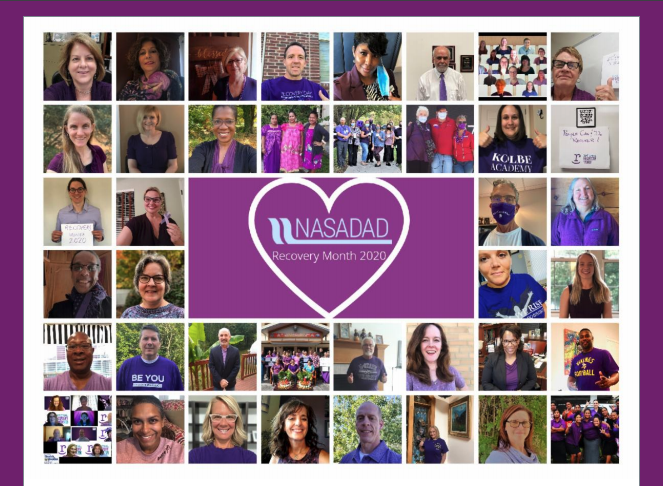
During the month of September, National Recovery Month, NASADAD Members, Component Group Members, and Staff submitted pictures of themselves wearing purple to help celebrate recovery and spread awareness of substance use disorder issues. Many thanks to Jen Smith (SSA, PA), Secretary and Region III representative on NASADAD’s Board of Directors, for developing this idea.
Cassandra Price (SSA, GA), NASADAD President, included with her picture this note: “Sporting my purple in support of Recovery Month 2020! Congratulations to all of those in recovery and continued unwavering hope for those searching for the path towards recovery. Never give up!”
NASADAD is grateful for the work State Director’s did in their respective States throughout the month of September, and for their ongoing efforts to support recovery every day of the year.
NASADAD releases Recovery Month Proclamation
To celebrate National Recovery Month, NASADAD released a proclamation that highlights the Association’s commitment to elevating the value and importance of recovery support services. The document provides recent data on the prevalence and costs of substance use disorders, the role that NASADAD members play in the publicly-funded SUD system, and a commitment to observe September 2020 as National Recovery Month. The proclamation can be viewed here.
NASADAD releases updated FY 2021 appropriations overview
NASADAD has released an updated appropriations overview to reflect the House Appropriation Committee’s passage of several appropriations bills for FY 2021, including the Labor, Health and Human Services (HHS), Education, and Related Agencies funding bill. The document outlines the House of Representatives’ recommended funding levels for NASADAD’s priority programs within the Department of Health and Human Services (HHS), the Department of Justice (DOJ), and the Office of National Drug Control Policy (ONDCP).